The Parallel Workflow Model for Product Recalls- Infographic
This infographic explains how brands can keep normal production running while a separate correction workflow handles recall inspection, rework, relabeling, repackaging, and kit assembly.
ISO 9001 vs. non-certified production partners comes down to process control, documentation, accountability, and risk management. An ISO 9001:2015 certified or registered production partner operates under a formal quality management system with documented procedures, training…
Quality KPIs help brands evaluate whether a production partner can deliver consistent results after work is outsourced. ISO 9001:2015 certification or registration shows that a quality management system is in place, but KPIs show how…
Standard work reduces assembly errors by giving operators a clear, repeatable process to follow every time a task is performed. In outsourced assembly, kitting, packaging, and fulfillment, standard work includes approved work instructions, trained operators,…
ISO 9001:2015 certified production partners improve process consistency by using a formal quality management system to control how work is planned, documented, performed, checked, and improved. For outsourced sub-assembly and kitting, this means that an…
Speed is one of the biggest reasons companies use kitting. When multiple components are consolidated into one finished kit, products can move through the supply chain with fewer touches. Instead of picking several individual items…
When third-party logistics partners handle your inventory, fulfillment accuracy isn’t just about getting the order out, it’s about getting the right product out, at the right time, under the right conditions. Brands shipping goods to…
Lot-code traceability is non-negotiable when product safety, compliance, and customer trust are at stake. For brands that rely on third-party logistics (3PL) providers for packaging or fulfillment, verifying that traceability systems actually work in practice,…
Enterprise Resource Planning (ERP) systems have become critical for maintaining inventory integrity and compliance in outsourced operations. When packaging, kitting, or fulfillment is handled by a third-party provider, brands must still ensure full visibility into…
Outsourcing fulfillment and packaging can help brands operate more efficiently and move more product, but it can also introduce serious risks. Lot-code traceability becomes harder to control when materials, labeling, and shipping are handled by…
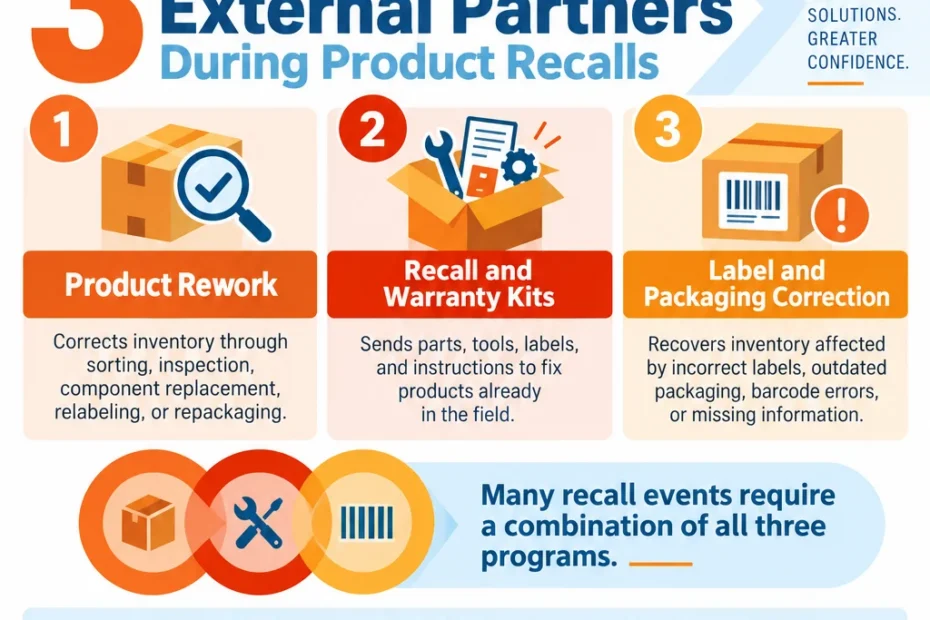
How Brands Leverage External Assembly and Kitting During Product Recalls or Corrections When a product recall or correction occurs, the immediate focus is usually on the defect, the labeling issue, or the component that needs…
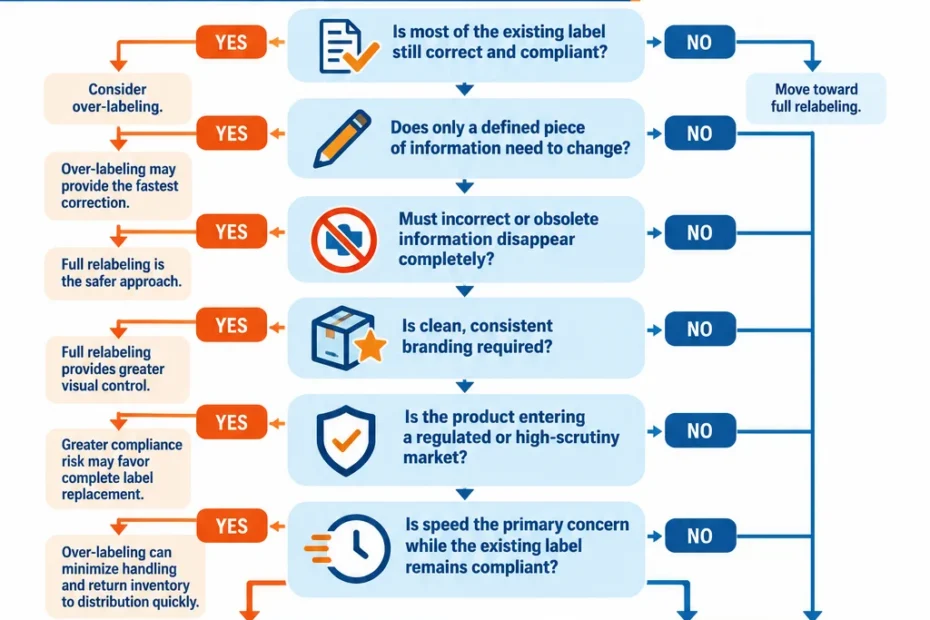
Over-Labeling vs. Relabeling vs. Repackaging: Label Error Correction Labeling errors can stop shipments, trigger retailer chargebacks, and create compliance risks, especially when products are already packaged and in distribution. When a barcode is incorrect, an…
A visual end-to-end map showing where packaging decisions impact speed, handling, and shelf placement, from inbound receipt to secondary packaging assembly to outbound distribution
Recall kits are often used when a product issue can be corrected without returning the entire unit. Instead of managing returns, companies can send a kit with the parts, tools, and instructions needed to complete…
When brands face a product recall or rework, corrective action is only part of the process. Production still needs to run, orders still need to ship, and most manufacturers do not have the extra space,…
When Labels Change Overnight, Brands Need a Fast and Compliant Fix From last-minute retailer mandates to sudden regulatory shifts, packaging label changes can happen with little warning. Emergency relabeling helps businesses avoid costly product holds,…
Nutrition labels are under constant scrutiny, from regulators, retailers, and increasingly aware consumers. When labeling requirements change or product formulations evolve, brands must update packaging quickly and accurately to stay compliant. Fast nutritional label updates…
Errors in packaging can derail entire shipments, delay product launches, and introduce compliance risks if not addressed quickly. But not every labeling issue requires scrapping inventory or restarting production. Packaging corrections give brands a cost-effective,…
Barcodes are small but powerful. When they’re misprinted, outdated, or incorrect, the impact ripples across your entire supply chain, blocking distribution, delaying shipments, or causing rejections at receiving docks. Replacing a barcode on a product…
This infographic defines scalable vendor-managed inventory (VMI) as more than replenishment—an expandable framework built on visibility, thresholds, and repeatable processes that adapt as demand and complexity increase.
Packaging mistakes happen; what matters is how you fix them. Whether it’s a misapplied barcode, outdated branding, or crushed packaging from transit, these errors don’t have to derail your distribution plan or compromise shelf appeal.…
Visualize the two primary pressure-sensitive labeling formats PPS supports and match each to
Key Takeaways Fulfillment is now a strategic, always-on capability—not just “shipping”—as brands sell across DTC, subscription, Amazon/marketplaces, and wholesale. Growth in e-commerce has expanded demand for warehouse capacity and raised the stakes for accuracy, visibility,…
Over-Labeling vs. Full Relabeling Service: Choosing the Right Fix for Label Errors and Updates Label misprints, outdated information, and regulatory changes are unavoidable in modern packaging and fulfillment operations. When corrections are required, the challenge…